You have watched your child fidget through a soccer practice, or come home quiet after a tough day, and wondered where they could feel strong. Then a friend mentions jiu-jitsu and the questions start. Is grappling safe for a small kid, will this martial art actually help, and the one nobody says out loud, will it make my child more aggressive.
Those are fair questions. This guide on kids BJJ in Woodstock, Ontario answers them plainly, with no promises we cannot keep.
What is BJJ, and is it a good martial art for kids?
Brazilian Jiu-Jitsu (BJJ) is a grappling martial art with roots in wrestling and judo. Among martial arts for kids, it stands out because there is no punching or kicking. Instead, students learn to control a partner on the ground using leverage, position and patience, then end an exchange with a "submission", a safe hold the other person can stop at any time. Because it relies on leverage rather than size, this jiu jitsu doubles as practical self-defence, which is part of why so many parents look at it for a smaller child. Kids learn self-defence the calm way here, real skills built through repetition, not a highlight reel.
When parents ask whether BJJ is good for kids, they usually mean three things. Will my child be hurt. Will it help them focus and feel more confident. And will all that wrestling turn into rougher behaviour at home and at school. Each one deserves an honest answer, so let us take them in turn.
Is grappling safe for a 5 to 7 year old?
Because BJJ has no strikes to the head, it avoids the impact that drives concussion concern in striking sports like boxing or kickboxing. Research on youth combat sports tends to view supervised grappling as lower risk for head injury than striking arts, though no physical activity is ever risk-free. The usual considerations in young grapplers are minor: bumps, the odd sore finger, the kind of scrapes any active kid collects.
What actually keeps a child safe is not the art on paper. It is the room. Tight supervision, partners matched by size and age, a curriculum that holds back risky techniques for little kids and a hard rule that training stops the instant someone taps. We will come back to how that works at the academy.
Does BJJ build focus and confidence?
The evidence on focus and confidence is promising but modest, not magical. A structured class gives a child steady practice at things that are genuinely hard for a young brain: following directions, waiting their turn, tolerating a little frustration and sticking with something until it clicks. Over months, many kids carry that patience into other parts of life.
Children develop confidence the same quiet way. A child learns one position, then another, gets a little better than they were last week and starts to believe they can figure hard things out. That is real self-belief earned through effort, not a personality transplant. We will not promise your child becomes a different person. We will say the mat is a good place to practise being a slightly braver one.
Will jiu-jitsu make my child more aggressive?
This is the fear almost no academy answers head-on, so we will.
The worry is understandable. You picture your kid learning to pin a classmate and using it badly. The honest read of the research points the other way for grappling: in one longitudinal youth study, children training BJJ showed a decline in aggression alongside gains in self-control, while a more combative style in the same study moved the other direction. That is one body of evidence, not a guarantee, and a lot depends on the culture of the room.
The reason comes down to what BJJ actually teaches. A child who can already control another person has far less to prove. Power without a chip on the shoulder tends to read as calm. The discipline is built into the practice itself. You stop when your partner taps, you respect the smaller kid across from you, and you leave the submission holds on the mat. This is also why so many parents find BJJ a thoughtful answer to a bully problem: the goal is the confidence and control to defuse a situation, not to win a fight. A well-run program reinforces restraint at every class. A poorly supervised one, anywhere, could do the opposite, which is exactly why the choice of academy matters.
How a coach runs kids BJJ in Woodstock
At Woodstock BJJ our children's programs are built by age and stage, not lumped together. Our Tots and Kids classes for the youngest students lean on movement games, safe falling, coordination and simple listening habits, a beginner-friendly start that asks for no athletic background at all and treats no child as a born athlete. The jiu-jitsu is real, but the instruction arrives through play. As children grow into our Youth and Teens classes, the drilling, the positions and the controlled "rolling", which is light live practice with a partner, become more structured.
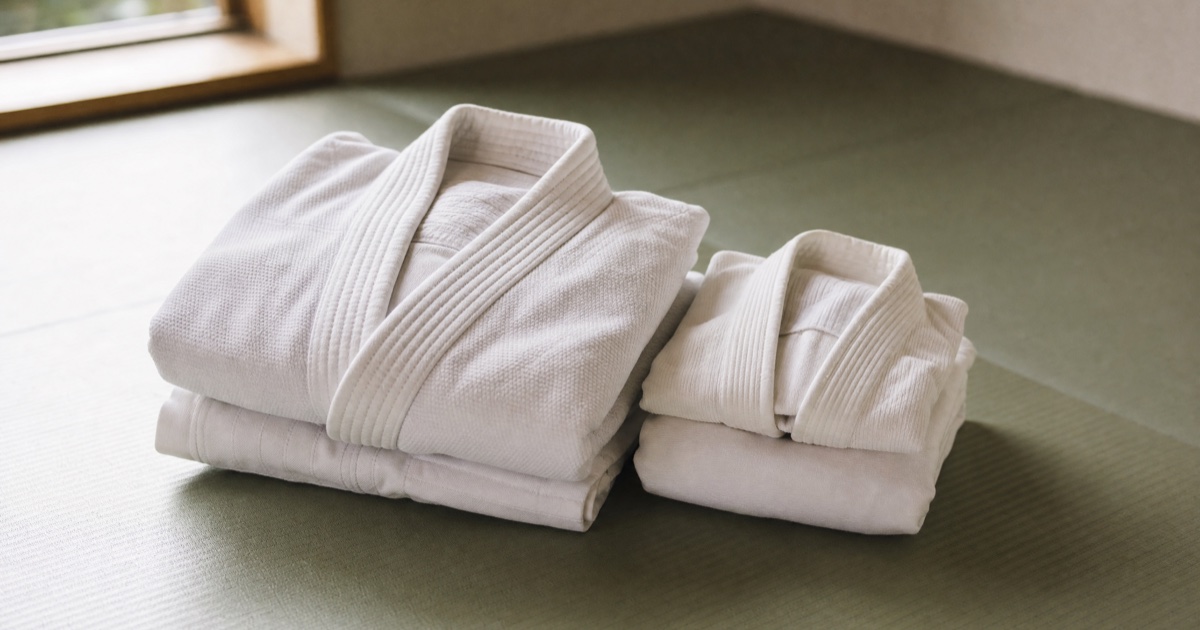
Every class is supervised and every child trains in a gi, the durable cotton uniform used in traditional BJJ. A typical session opens with a warm-up game, then drills a single fundamental at a time, and no martial arts experience is needed to start. The skills our youngest students learn echo our BJJ Basics curriculum for adults, scaled down and made fun: posture, coordination, escapes and a drill or two, then later some light positional sparring, where two kids spar from one position rather than going all out. We add live rounds only when a child is ready. Older children fold in no-gi work too, training without the jacket, which helps them round out their skills. Loaner gis are available for a first class, so no family needs to buy gear before a child has even tried it. The aim is steady, age-appropriate progress in a supportive training environment, never a race.
Safety on the mat is the structure, not a slogan
Safety in a kids class is not a poster on the wall. It is a set of habits.
The tap is the universal stop button. A child taps their partner or the mat with a hand, and the other student releases right away, every time, whether the tap means discomfort, fatigue or just feeling overwhelmed. Our coaches teach it on day one and treat it as sacred. Add in size-matched partners, coaches on the floor and a curriculum that withholds the riskier submissions from young children, and you have a room where kids can test themselves without getting hurt. That structure is the foundation every safe martial arts class for children is built on.
The Woodstock BJJ approach
We are a local academy, and that shapes how we teach. Our BJJ academy trains families from across Oxford County, from Ingersoll and Tillsonburg to Norwich and the smaller communities along the 401 corridor. Our BJJ kids program starts with a free introductory class at our Woodstock training facility. These trial classes are low-pressure, and you can see class times at woodstockbjj.ca. Our coaches help students settle in from the first night, in a supportive environment where every child's BJJ journey starts at their own pace. Many of our young students are kids whose parents simply wanted one good activity that builds the body and the temperament at once. You can see the full lineup on our programs page, and the class times that fit a school-night routine on our schedule.
That standard comes from a real lineage. Our owner and head coach is Professor Ryan O'Shea, an IBJJF 3rd Degree black belt, recognised by the International Brazilian Jiu-Jitsu Federation (IBJJF), the main body that sets belt and competition standards for the art. A black belt of his rank is a lifelong practitioner and martial artist, and Coach Ryan trains in the Royler Gracie line through Professor Jorge Britto, a founding member of the Jiu-Jitsu For Life Team. Our coaches welcome every child, across all experience levels, and the goal is a strong foundation your child can build on for years. For a parent, lineage is not trivia. It is a promise that the adults teaching your child learned the art properly and pass it on with care. You can read more about that background on our instructors and about pages.
Frequently asked questions
What age can my child start kids BJJ?
Many academies begin children around ages four to six, and we group our youngest students into Tots and Kids classes built for that stage. Readiness varies by child, so the best test is a single trial class to see how your child settles in.
Is BJJ safe for young children?
BJJ has no head strikes, and supervised grappling is generally viewed as lower risk for head injury than striking arts, though no sport is risk-free. The safety comes from supervision, size-matched partners and the tap that stops training instantly, all of which are built into our kids classes.
Will BJJ make my child more aggressive?
The honest answer from the research leans the other way, with one youth study linking BJJ to lower aggression and better self-control. A child who can control a situation has less to prove, and a well-supervised program reinforces restraint, though outcomes always depend on the culture of the academy.
Does my child need a uniform to try a class?
No. We have loaner gis available for a first visit, so your child can show up in comfortable clothes and try children's BJJ before you buy anything.
How often should a child train?
For most young kids starting out, one or two classes a week is plenty to build the habit without overload. You can find times that work around school on our schedule page.