You do not need to get in shape to start BJJ. You get in shape by doing it. That single sentence is the honest answer almost every adult wants before walking through our door. BJJ for beginners is not a fitness test you have to pass first. Brazilian Jiu-Jitsu (BJJ for short, a grappling martial art done on the ground) builds the engine, it is not the reward for already owning one. If you have been waiting until you feel ready, you already are.
What a jiu-jitsu beginner is really afraid of
Let us name it plainly. The worry is rarely about armbars or chokes. It is about walking onto a mat (the padded floor we train on) feeling like the least fit person in the room, gassed out in five minutes while everyone watches.
Most students felt that exact same thing on day one. We hear it weekly from adults across Woodstock and Oxford County, and it is the single most common reason people put off starting for years. So here is the truth about it. Brazilian jiu jitsu is a grappling art, not a striking one. There is no punching or kicking. You learn to control another person on the ground with leverage, position and timing, then to finish with a submission when the moment is right. A submission is a hold, like a choke or a joint lock, that makes your training partner tap to signal stop. Because the system runs on leverage instead of raw force, a smaller person can control a larger one. That is what makes BJJ for beginners genuinely friendly to people who do not feel athletic.
BJJ for beginners: you build the fitness by training
There is no workout at home that fully prepares you for grappling. Even people who run or lift find the demands surprising at first. The good news cuts both ways. If running cannot fully prepare you, then not running cannot disqualify you either.
The conditioning you need is built on the mat, through the exact movements you will use. You do not arrive fit. You arrive willing, with no grappling experience required. The fitness shows up a few weeks in, almost by accident, while you were busy learning the fundamentals. So "am I too out of shape for BJJ" is the wrong question. The better question is whether the academy paces a beginner properly. A good one expects you to be deconditioned and builds from there. We do.
The jiu-jitsu positions a beginner learns first
You do not need to memorize anything before your first session, but it helps to know the shape of what is coming. Jiu-jitsu is built on a positional hierarchy, and basic BJJ is a small set of positions repeated until they feel natural. The fancy stuff comes much later.
From closed guard to open guard and half guard
The first idea is the guard, where you are on your back with your legs between you and your partner, controlling distance to stay safe. The simplest version is closed guard, ankles crossed behind their back. From there you meet open guard, where your feet and knees frame instead of locked ankles, and half guard, where you trap one of their legs. These are the basic grammar of the art, and you touch them in your first few weeks. Keeping or rebuilding that position, what we call guard retention, is most of the early work.
Passing to side control, mount and back control
The other half of the map is what happens when a partner clears your legs with a guard pass. They reach a dominant spot: side control (sometimes called side mount), lying across your chest, then the mount position on top, then the toughest one, back control from behind. Learning to breathe, stay calm and recover guard from underneath these positions is what most early training is about.
The first choke and other submissions a beginner meets
The submissions come slower than newcomers expect. A submission is the finish, the moment your training partner taps. A beginner eventually meets a few classics: the armbar (straightening the elbow), the triangle choke (trapping the head and an arm with your legs) and the rear naked choke from back control. You will not hunt any of them in week one. They arrive only after the positions feel familiar, because a finish without position rarely works. We teach one piece at a time, in plain language, and we repeat it.
What your first jiu-jitsu class and first month look like
Your first class follows a predictable rhythm. A short orientation, a light warm-up, then one or two fundamental movements like the hip escape (called shrimping) or the bridge. You drill those slowly with a training partner while a coach watches. A drill is a slow, cooperative repetition. Most beginners do little or no live sparring on day one, and that is by design. Sparring, also called rolling, is practising the techniques against light resistance. Nobody expects you to tap anyone on night one.
What to wear: gi or no-gi for your first class
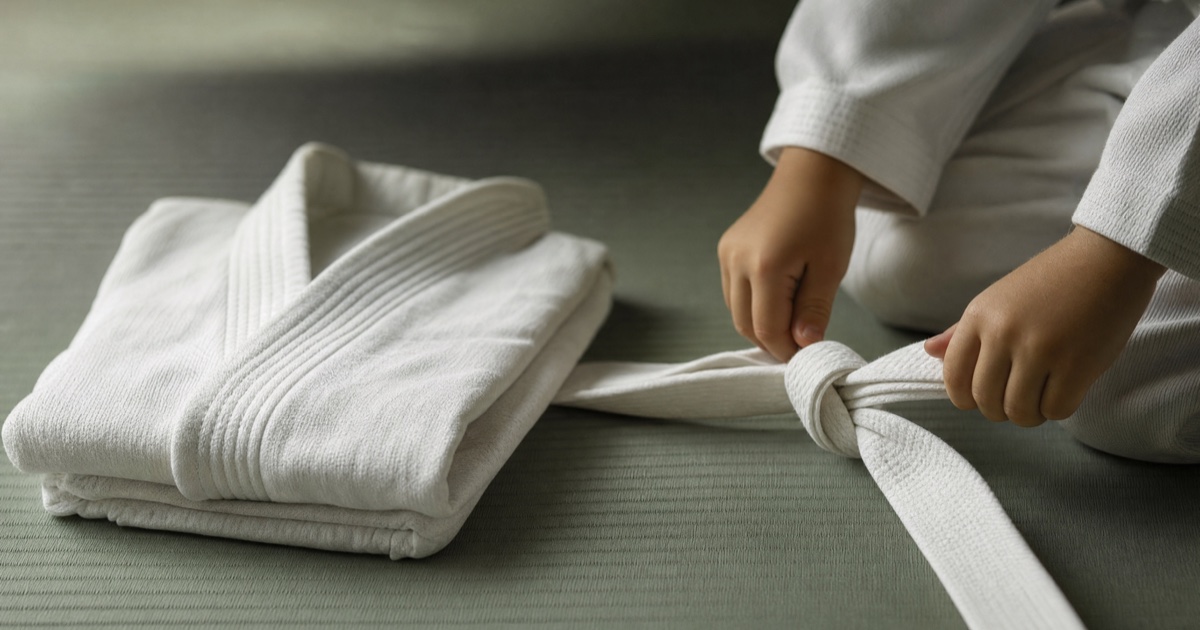
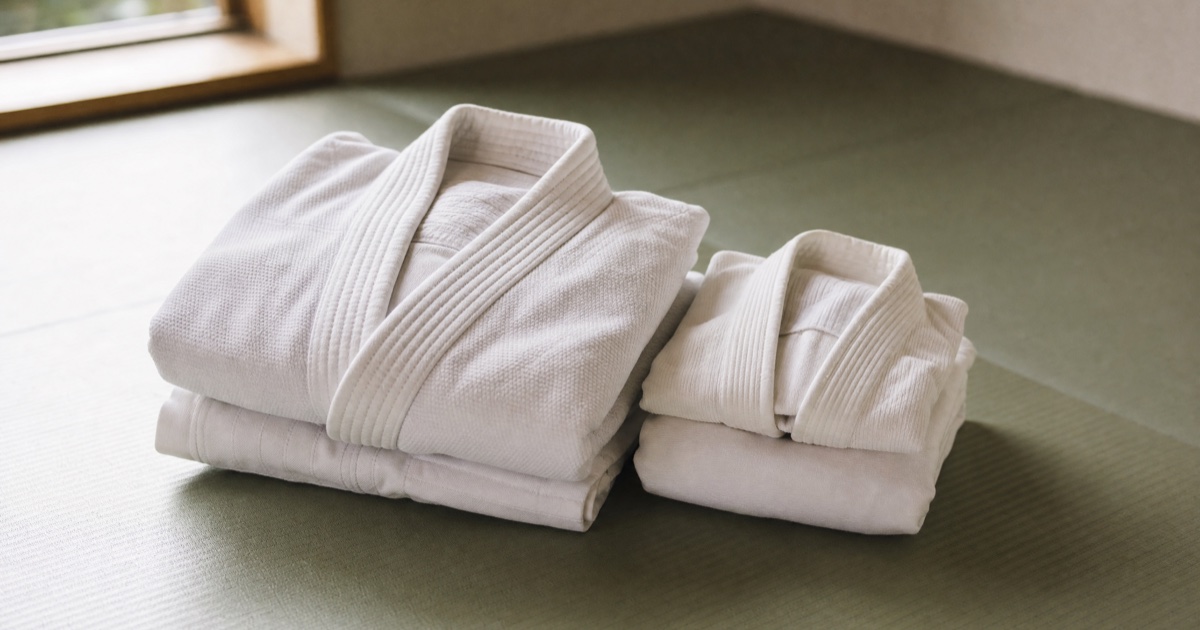
If you own a gi (the traditional jacket-and-trousers uniform), bring it. If not, fitted athletic clothing is fine for your trial, and it works for no-gi classes (training without the jacket) too. Bring water and flip-flops, trim your nails and leave watches and jewellery at home. Arrive ten minutes early to meet the coach without feeling rushed. That is the whole preparation a beginner needs.
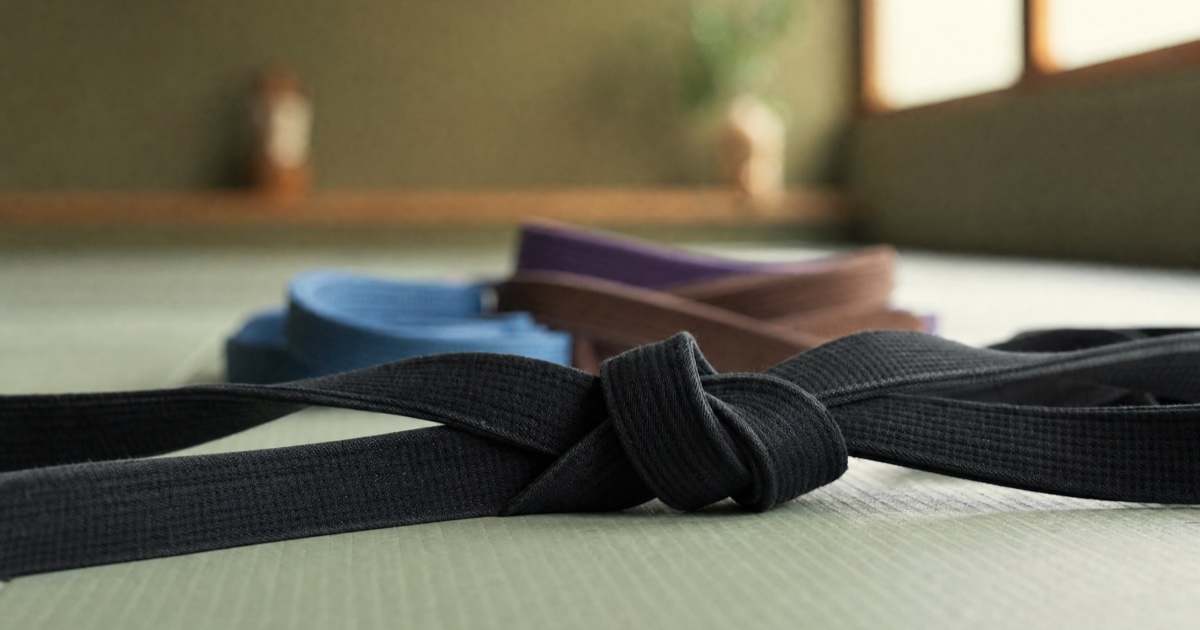
In weeks one and two, expect to get winded fast and sore the next day, often in your neck, hips and grip. It fades. Pause and breathe whenever you need to. By weeks three and four something shifts: you get through more of the class, recover faster and feel less awkward on top and on the bottom. As a white belt (the rank everyone starts at) you are simply less lost, which is exactly the right pace. Training two times a week is plenty to start.
How we keep a beginner safe around submissions
Pacing is a coaching decision, not a personality test. At Woodstock BJJ we pair new students with experienced, controlled partners, never two nervous beginners going too hard. You start in our BJJ Basics program, which is fundamentals at a sane speed.
Then there is the tap. Tapping out means slapping your partner or the mat, or just saying tap, to signal stop. Your partner releases immediately, every time. You can tap to any submission, or for any reason at all: a tough position, fatigue, or just a breather. The tap is the universal safety valve that lets adults train hard without getting hurt. We never promise zero risk, because no honest coach can. We promise structure, supervision and a partner who works with control.
The Woodstock BJJ approach
We are a community academy in Woodstock, in the heart of Oxford County, and many of our adults are first-timers from town and the 401-corridor communities like Ingersoll and Tillsonburg. Plenty arrive convinced they are the exception, too busy or too out of shape. They are not. Our beginner-friendly schedule and our free trial class exist so you can test the water with zero pressure, then decide.
Our roots matter here too. Woodstock BJJ is led by Professor Ryan O'Shea, a BJJ black belt at 3rd degree in the Royler Gracie lineage through Professor Jorge Britto, a founding member of the Jiu-Jitsu For Life Team. You can meet our coaching team before you ever step on the mat. Our sister academy, Stratford BJJ, shares the same lineage and the same beginner-first values.
Frequently asked questions
Do I need to be strong or fit before I start BJJ?
No. A BJJ beginner does not need strength or cardio to begin. Technique, not muscle, makes the movements work, and the conditioning is built through training itself. Starting where you are is the entire idea.
What should I wear to my first BJJ class?
If you do not own a gi yet, wear fitted athletic clothing: a snug shirt or rashguard and shorts or leggings with no pockets or zippers. That works for both gi and no-gi classes. Bring flip-flops, trim your nails and leave jewellery at home.
How many days a week should a beginner train?
Two times a week is a great starting point for most adults. It builds steady skill and fitness while giving your body rest days to adapt. You can add more once your body has settled in, usually after the first month or two.
How long does it take to feel less lost?
Most beginners stop feeling overwhelmed within three to four weeks of consistent training. You will not be good that fast, and nobody expects you to be. You will simply recognize positions, breathe easier and enjoy it more.